
The Complete Branding Guide for Startups in India (2026)


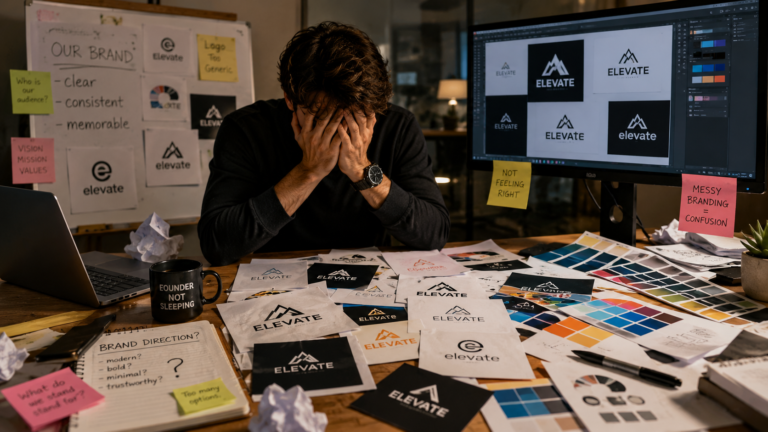
Most startup founders treat branding as something they will figure out later. They launch with a logo made in Canva, pick their favourite colours, and move on to what feels more urgent — product, sales, and growth.
Then six months in, they wonder why customers do not remember them, why their marketing does not convert, and why they keep losing deals to competitors who simply look more credible.
The problem was never the product. It was the brand.
This guide covers everything a startup founder in India needs to know about building a brand that actually works — from foundational strategy to visual identity, from common mistakes to what good branding actually costs. If you are building from scratch or feel like your current brand is not working, start here.
What Branding Actually Means (And What It Does Not)
Branding is not your logo. It is not your colour palette. It is not your Instagram aesthetic.
Your brand is the feeling a person gets when they interact with your business. It is what they think of when they hear your name. It is the reason someone chooses you over a cheaper or more convenient competitor.
Jeff Bezos said it best: “Your brand is what people say about you when you are not in the room.”
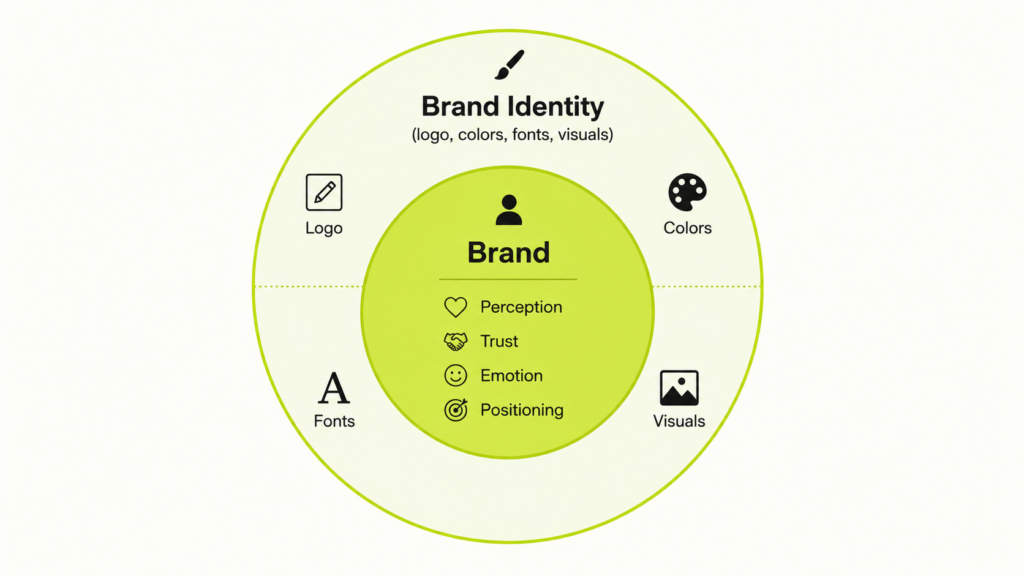
Everything visible — your logo, colours, typography, packaging, website, social media — is your brand identity. It is the expression of your brand. But the brand itself is something deeper: it is the perception, the trust, the emotional association.
A startup that understands this distinction builds a brand that attracts customers. One that does not builds just a logo.
Why Branding Matters More for Startups Than Anyone Else
Established companies can afford weak branding — they have years of reputation, word-of-mouth, and customer history behind them. Startups have none of that.
When a potential customer finds your startup for the first time, they make a judgement in seconds. If your brand does not immediately signal credibility, professionalism, and relevance — they leave and do not come back.
Here is what a strong brand does specifically for a startup:
Builds trust before you have earned it. A well-designed brand makes a new business look established. Customers cannot tell the difference between a two-month-old startup and a two-year-old company if the brand is solid.
Makes marketing cheaper. When your brand is clear and consistent, every marketing rupee works harder. You spend less time convincing people and more time converting them.
Attracts the right customers. A brand built for a specific audience repels the wrong customers and pulls in the right ones. This means fewer bad-fit clients, better retention, and more referrals.
Supports premium pricing. People pay more for brands they trust. A startup with strong branding can charge more than a competitor with a similar product and a weaker brand.
Gives your team a common language. When everyone inside the company knows what the brand stands for, decisions become faster and more consistent.
The 4 Foundations of a Startup Brand
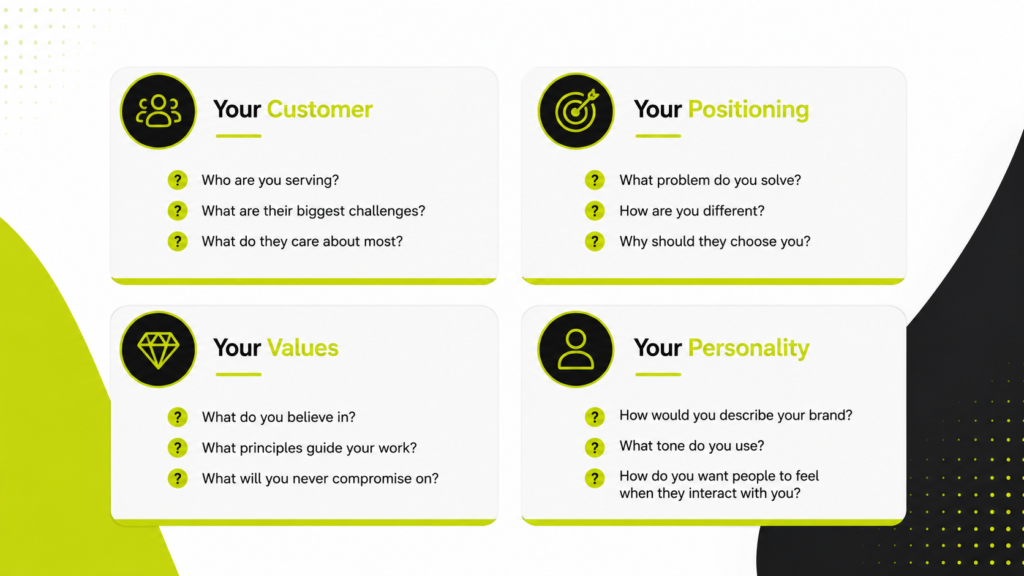
Before you design anything, you need to answer four questions. Skip these and your visual identity will be built on sand.
Foundation 1 — Who Is Your Customer?
Not “everyone.” Not “small businesses.” Get specific.
What does your ideal customer do for a living? What problem are they trying to solve? What do they search for? What do they distrust? The more precisely you can describe this person, the better every single branding decision becomes.
Foundation 2 — What Is Your Positioning?
Positioning is the single most important strategic decision in branding. It answers: why should your specific target customer choose you over every alternative?
A simple formula: [Brand] is the [category] for [target customer] who wants [key benefit], unlike [alternative].
Example: Haxova is the branding and digital marketing agency for Indian startups and small businesses who want to grow online, without the high costs and slow pace of traditional agencies.
Foundation 3 — What Are Your Brand Values?
Real brand values are specific enough to guide decisions. They are not words like “quality” and “innovation” that every company claims.
Ask yourself: what would we never do, even if it made us money? What do we stand for that our competitors do not?
Foundation 4 — What Is Your Brand Personality?
Think of your brand as a person. If your brand walked into a room, how would it behave? Is it confident and direct, or warm and approachable? Is it playful or serious? Premium or accessible?
Your brand personality determines your visual choices and your communication style.
What a Complete Brand Identity Includes
Once your strategy is clear, the brand identity is how it shows up visually. Here is what a complete brand identity for a startup should include.
Logo System
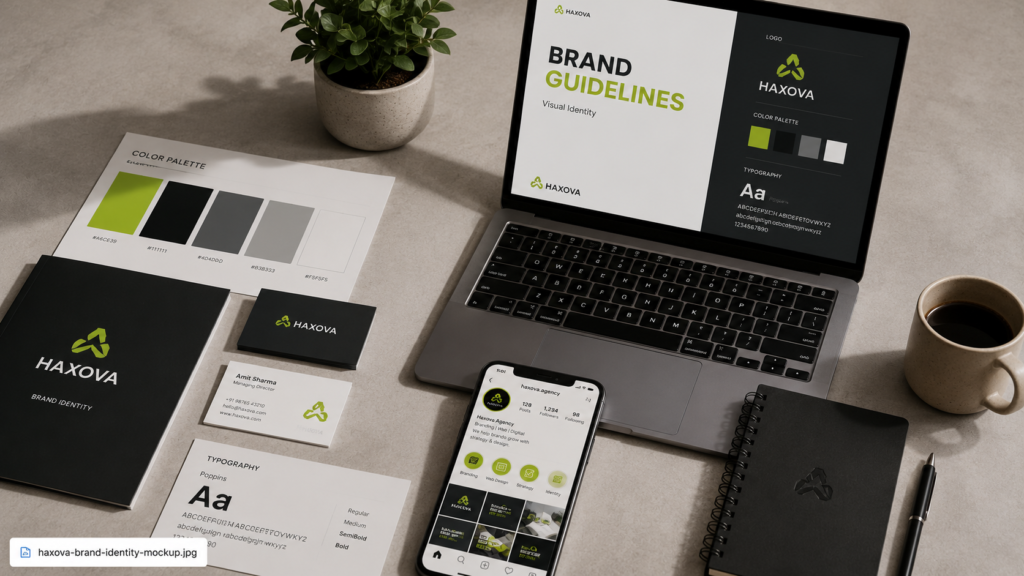
Not just one logo — a logo system. This means a primary logo for your website and main brand touchpoints, a secondary or alternate logo for smaller applications, a standalone icon or symbol for app icons and social media profile pictures, and a wordmark which is your business name set in your brand typography.
Each variation exists because your brand will appear in places where the full primary logo does not work — a tiny favicon, a circular social media photo, an embroidered patch.
Colour Palette
A professional brand palette has a primary colour which is the dominant brand colour used most often, secondary colours of one or two supporting colours that complement the primary, neutral colours such as whites, grays, and blacks for backgrounds and text, and an accent colour used sparingly for highlights and calls to action.
Every colour must have its HEX code for digital, RGB values for screen, and CMYK values for print. Without these, anyone who works on your brand will reproduce your colours slightly differently every time.
Typography
Most brands need two typefaces — a heading font that is strong and distinctive for titles and major text, and a body font that is highly readable for paragraphs and smaller text. These two fonts should work well together and be available across web, print, and design tools.
Brand Guidelines Document
This is the rulebook for your brand. It documents how every element should be used — and how it should not. Without brand guidelines, your brand will look different every time someone new touches it.
Social Media Kit
Ready-to-use templates for your main social platforms — profile picture, cover photo, post templates. These ensure your brand looks consistent on Instagram, LinkedIn, and everywhere else you show up.
See how Haxova builds brand identities for startups
Brand Voice — The Part Most Startups Ignore
Your brand voice is how your brand communicates in words. It is the personality that comes through in your website copy, your Instagram captions, your email subject lines, and your messages to clients.
When your visual brand and your written brand feel different, customers sense the disconnect — even if they cannot articulate it.
Define your brand voice by answering these questions. What three words describe how your brand sounds — direct, warm, and expert, or bold, playful, and honest? What would your brand never say? Is your audience expert or beginner level? Formal or conversational?
Once defined, your brand voice should be documented and shared with anyone who writes on behalf of your brand.
How Branding Directly Impacts Your SEO and Digital Marketing
This connection is something most branding conversations miss entirely.
Branded search volume. When people search for your company name directly, that is a brand signal to Google. Strong brand awareness means more branded searches, which means better overall domain authority over time.
Click-through rates. A recognisable brand name in search results gets more clicks than an unknown one — even if the positions are the same. Brand trust translates directly to organic CTR.
Backlinks. Strong brands attract organic mentions and backlinks. Other websites reference brands, not logos.
Social signals. Consistent brand presence on social media drives traffic back to your website, which strengthens domain authority over time.
Conversion rates. Visitors who recognise your brand from social media or elsewhere convert at significantly higher rates. Branding and performance marketing work better together than either does alone.
Read: 7 Startup Branding Mistakes That Kill Growth
6 Branding Mistakes Startups Make That Are Expensive to Fix
Mistake 1 — Starting With Design Before Strategy
The most common and most costly mistake. If you do not know who you are for and what you stand for, no logo will fix that. Design without strategy is just decoration.
Mistake 2 — Building a Brand for Yourself, Not Your Customer
Founders often pick colours they personally like, write copy that impresses their peers, and design a logo they are proud of — without ever asking if it resonates with their actual customer.
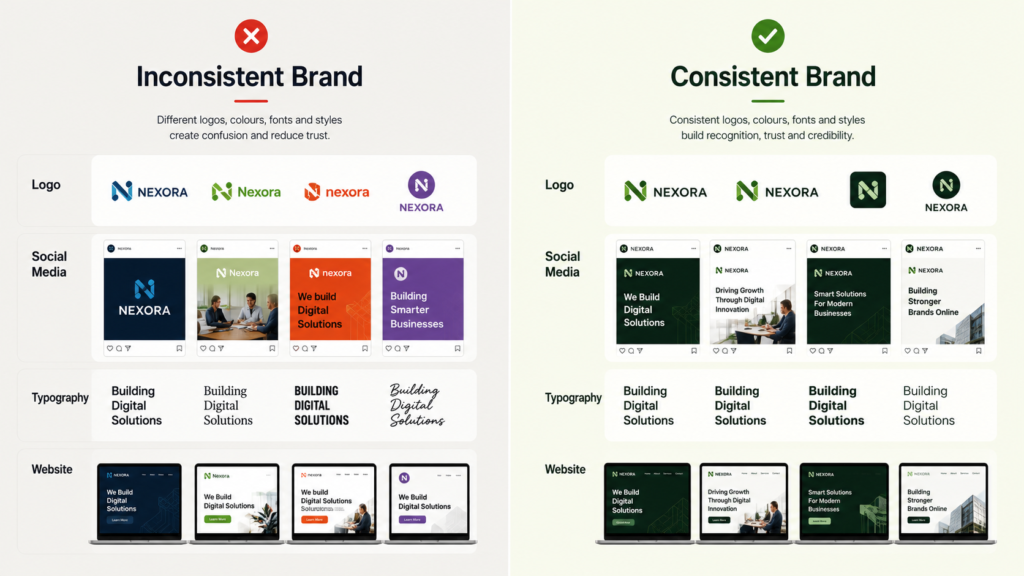
Mistake 3 — Inconsistency Across Platforms
Your logo is one colour on your website, a slightly different shade on Instagram, and pixelated on your business card. Your tone is professional on LinkedIn and casual on WhatsApp. Inconsistency destroys trust faster than a weak logo ever could.
Mistake 4 — Copying Competitors
Benchmarking is useful. Copying is fatal. If your brand looks like your competitor’s, you give customers no reason to choose you. You compete on price by default.
Mistake 5 — Skipping Brand Guidelines
Even if you have invested in a great logo and identity, without documented guidelines, every future vendor or team member will interpret your brand differently. You will spend the next year doing corrections.
Mistake 6 — Treating Branding as a One-Time Task
Your brand should evolve as your business grows. Not a complete overhaul every year — but regular reviews to ensure your brand still reflects who you are and who you serve.
DIY Branding vs Hiring a Branding Agency
This is a real question for early-stage startups watching every rupee. Here is an honest answer.
DIY branding makes sense when you are pre-revenue and genuinely testing an idea, when design norms do not matter much in your market, or when you have design skills yourself.
Hiring a branding agency makes sense when you are going to market and need to make a strong first impression, when you are pitching investors or enterprise clients, when you have tried DIY and it is not working, or when you are spending money on marketing — because weak branding kills ad performance.
The hidden cost of bad branding is rarely discussed. Every rupee you spend on ads that do not convert, every lead that does not close because you did not look credible, every good candidate who chose a competitor — that is the real cost of skipping proper branding.
See full branding cost breakdown for Indian startups
How to Choose the Right Branding Agency for Your Startup
Not every agency is right for every startup. Here is what to look for in short.
They should start with a discovery process and understand your business before designing anything. Their portfolio should have work relevant to your market or style. They should deliver a complete identity system, not just a logo file. They should be transparent about pricing, timelines, and revisions. And they should think in terms of business outcomes, not just aesthetics.
Full guide with questions to ask and red flags to watch for
Logo Design vs Brand Identity — They Are Not the Same
These two terms get used interchangeably but they are very different in scope and value.
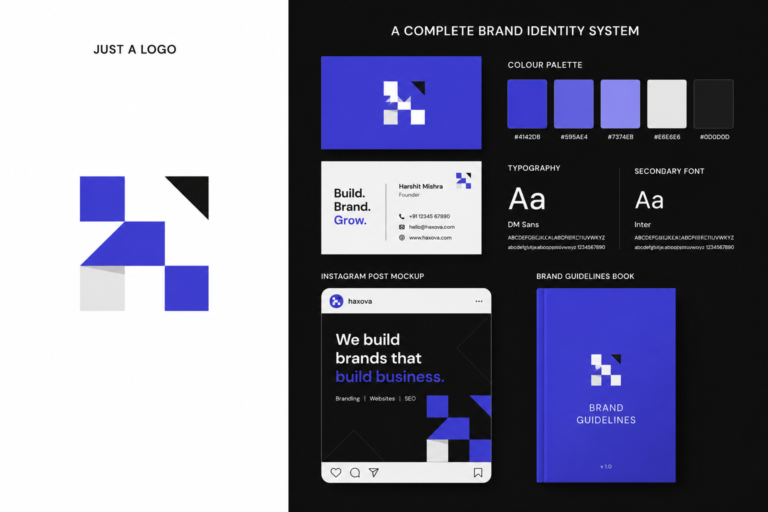
Logo design is one deliverable — a mark that represents your business visually.
Brand identity is a complete system — the logo plus colours, typography, guidelines, voice, and everything else that ensures your brand is consistent and recognisable everywhere it appears.
A logo without a brand identity is like a house with a door and no walls. The door looks great, but it does not do anything useful on its own.
Read: Logo Design vs Brand Identity — What’s the Difference?
What Is Brand Identity?
For founders who are new to branding, brand identity is the collection of visual and verbal elements that make your business recognisable and consistent.
It includes everything your customer sees and hears from your brand — your logo, colours, fonts, website design, packaging, tone of voice, and social media visuals.
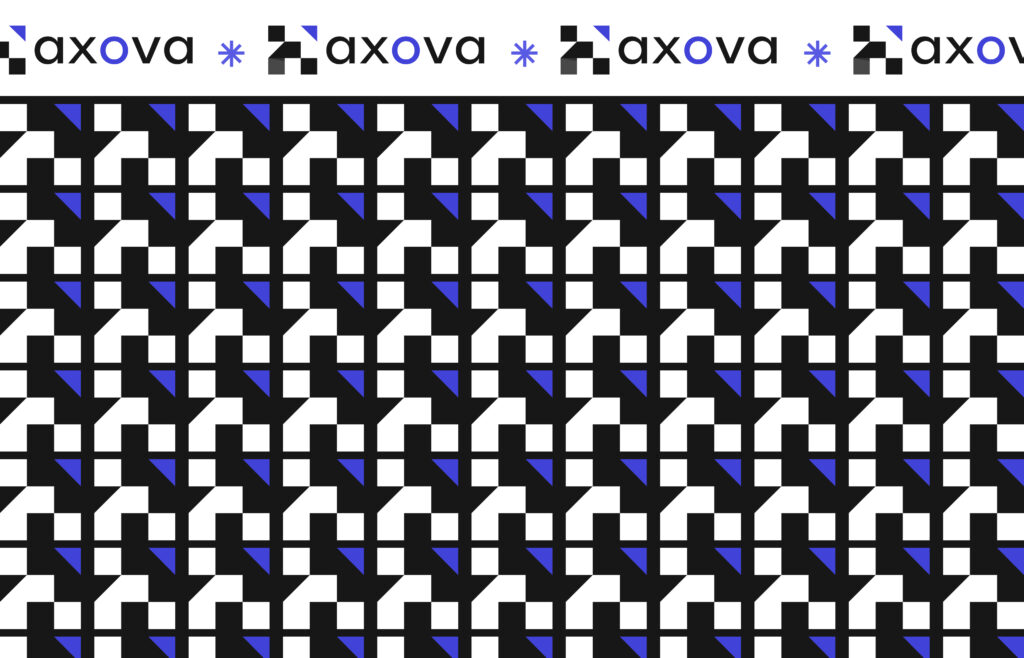
When all these elements work together from a common strategy and follow the same rules, your brand feels professional, trustworthy, and memorable. When they do not, it feels amateur — even if individual pieces look decent.
Read: What is Brand Identity and Why Does Your Startup Need It?
How Long Does Building a Brand Take?
Here is a realistic timeline for a startup branding project.
Discovery phase where the agency researches your business, audience, and competitors takes 3 to 5 days. Brand strategy covering positioning, values, and personality takes 2 to 3 days. Design concepts with first logo and identity directions take 5 to 7 days. Feedback and revision rounds take 5 to 10 days depending on how quickly you respond. Final delivery of all files, guidelines, and social kit takes 2 to 3 days. Total time is typically 3 to 5 weeks.
Rushing this process is one of the most common reasons founders end up with a brand they want to redo six months later. Give it the time it deserves.
How Haxova Helps Startups Build Their Brand
Haxova is a branding and digital marketing agency that works specifically with startups and growing businesses across India.
We start every branding project with a discovery session to understand your business, your customers, and your market. Only after that strategy work is complete do we start building your visual identity.
Every Haxova branding project includes brand strategy and positioning, a complete logo system, colour palette and typography, brand guidelines, and a social media kit. We work 100 percent online and serve clients across Delhi, Mumbai, Bangalore, Hyderabad, Pune, and the rest of India.
Ready to build your brand? Talk to the Haxova team
Frequently Asked Questions
What is branding for a startup?
Branding for a startup is the process of defining what your business stands for, who it serves, and how it is different — then expressing that through a consistent visual and verbal identity. It includes strategy, visual identity, brand guidelines, and brand voice. Strong branding helps a startup build trust and attract the right customers from day one.
When should a startup invest in branding?
Ideally before you go to market — or at least before you spend significantly on marketing. Every rupee spent on advertising a brand that does not convert well is wasted. If you are about to launch, start pitching investors, or ramp up marketing, get your branding in order first.
What is the difference between brand strategy and brand identity?
Brand strategy is the thinking — your positioning, your target audience, your values, and your personality. Brand identity is the execution — the logo, colours, and typography that express the strategy visually. Strategy always comes first. Identity follows.
How much does branding cost for a startup in India?
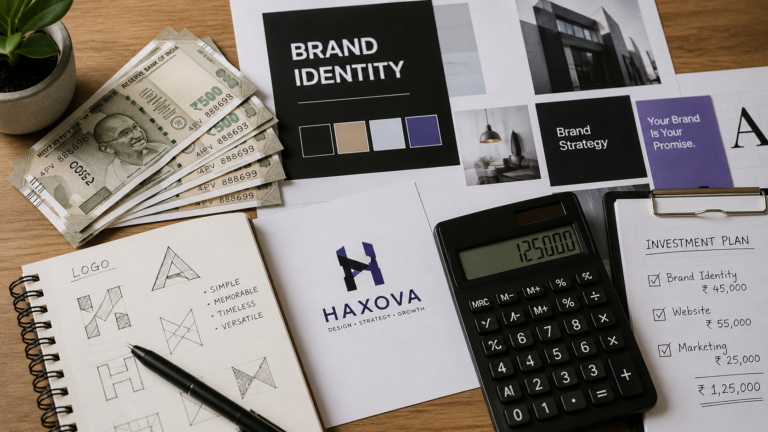
A complete brand identity for a startup in India typically costs between Rs 50,000 and Rs 2,00,000 depending on scope and agency. Logo-only projects can be done for Rs 15,000 to Rs 50,000, but come without the strategy and system that make branding actually work.
Can I do my startup branding myself?
You can — especially pre-revenue when you are testing an idea. But DIY branding usually lacks strategic thinking, looks generic, and does not scale well. Once you are going to market seriously, professional branding is worth the investment.
How do I know if my startup branding is working?
Signs it is working: people remember your brand name after one interaction, your visual identity looks consistent everywhere, your marketing converts well, and new leads arrive with some existing awareness of who you are. Signs it is not: people confuse you with competitors, your marketing does not convert, or your brand looks different across platforms.

Hi there,
With the new semester approaching, the cost of course materials can add up quickly.
At ReadWisely, we focus on making academic success more accessible by providing textbooks at significantly reduced prices. Whether you are looking to save on required reading or want to avoid the high costs of campus bookstores, you can find affordable options for your courses here: ReadWisely.com
Feel free to browse our collection and see how much you can save on your materials this term.
Best regards,
The ReadWisely Team
ReadWisely.com
[Timestamp: 2026-06-20 23:31:34]