
7 Startup Branding Mistakes That Kill Growth


Most startup founders do not realise they have made a branding mistake until six months after making it. By then, the damage is already in motion — inconsistent platforms, underperforming marketing, clients who chose a better-looking competitor, and money spent that needs to be spent again to fix it.
Branding mistakes are not always obvious when you make them. They look like reasonable decisions at the time — saving money, moving fast, following instinct. But they compound quietly and surface later as real business problems.
These are the seven most common and most damaging branding mistakes startups make — and what to do instead.
Mistake 1 — Designing Before You Have a Strategy
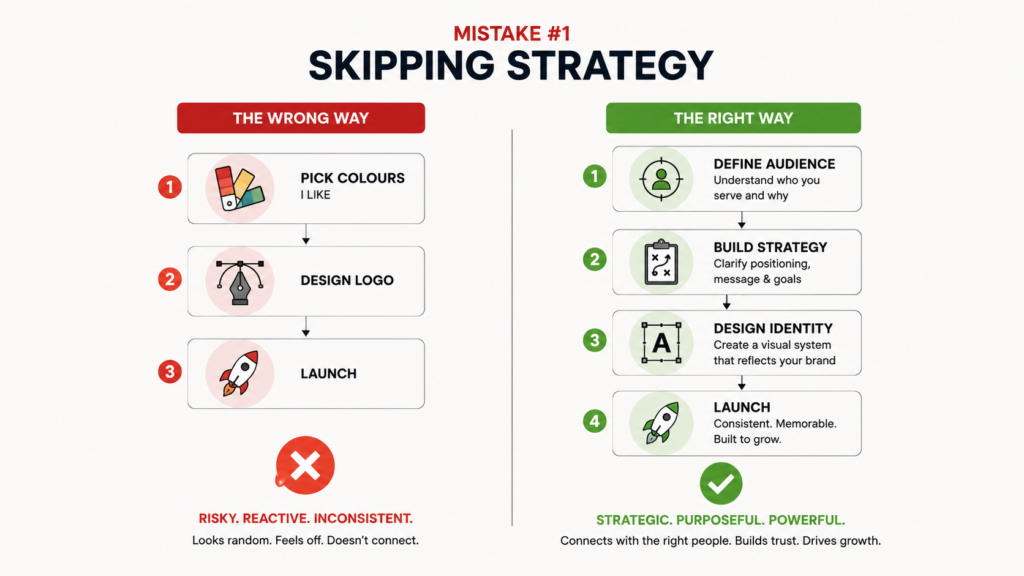
This is the most common and most expensive branding mistake. Founders jump straight to logo design before they have answered the questions that should drive every design decision.
Who is your target customer — specifically, not broadly? What do you stand for that your competitors do not? What feeling should your brand evoke in the people you are trying to reach? What is your positioning in the market?
Without clear answers to these questions, your designer is essentially working blind. They make decisions based on aesthetics and personal taste — theirs and yours — rather than on what will resonate with your actual target audience.
The result is a brand that looks fine but does not work. It does not attract the right customers. It does not differentiate you from competitors. It does not communicate the right message at first glance.
The fix is always the same: strategy before design. Before briefing any agency or freelancer, define your target audience, your positioning, your values, and your brand personality. These answers become the brief. Design follows.
Read: The Complete Branding Guide for Startups in India
Mistake 2 — Building a Brand for Yourself Instead of Your Customer
This mistake is so common it deserves its own name. Call it founder branding.
It looks like this: you pick your favourite colours, write copy that sounds impressive to your peers, design a logo you personally love, and choose a tone of voice that feels natural to you. The brand ends up reflecting you — not your customer.
The problem is that your customer’s taste, values, and preferences may be completely different from yours. A brand that excites you might leave your target audience cold. A tone that feels natural to you might feel wrong to the person you are trying to reach.
The fix is to filter every branding decision through one question: would this resonate with my specific target customer? Not your co-founder. Not your friends. Not potential investors. Your target customer.
This requires actually knowing who that person is — which comes back to doing the strategic work before design begins.
Mistake 3 — Going Cheap on Branding While Spending on Marketing
This is the most financially damaging mistake on the list, and it is also one of the most logical-sounding ones at the time.
The reasoning goes like this: branding is expensive, marketing brings in customers, so cut the branding budget and put the money into ads. It feels pragmatic.
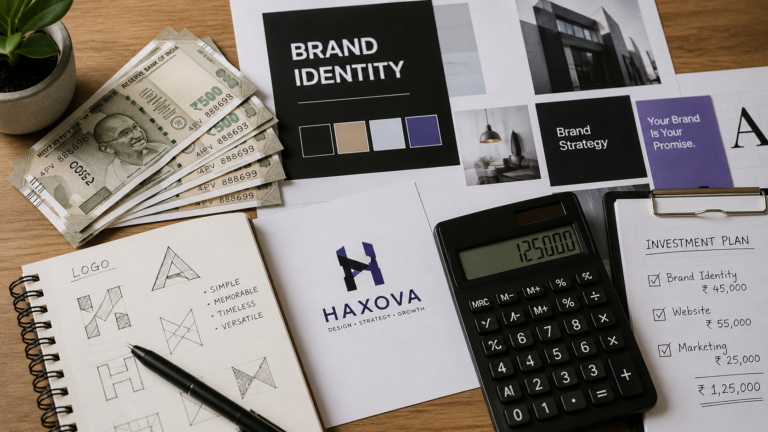
Here is what actually happens. You spend Rs 30,000 on a cheap logo from a freelancer. You then spend Rs 50,000 per month on Google and Meta ads pointing to a website built around that weak brand. Your conversion rate is 1.5 percent because your brand does not look credible enough for visitors to trust you with their money.
Now imagine you had spent Rs 1,00,000 on a complete brand identity that made your website look genuinely professional and trustworthy. Your conversion rate becomes 3 percent. The same ad spend now generates twice the revenue. The brand identity pays for itself in the first two months.
Branding is not a cost that competes with marketing. It is the foundation that determines how well your marketing performs. Weak branding makes every marketing rupee less effective. Strong branding multiplies the return on every rupee you spend.
Read: How Much Does Branding Cost in India? 2026 Pricing Guide
Mistake 4 — Inconsistency Across Platforms
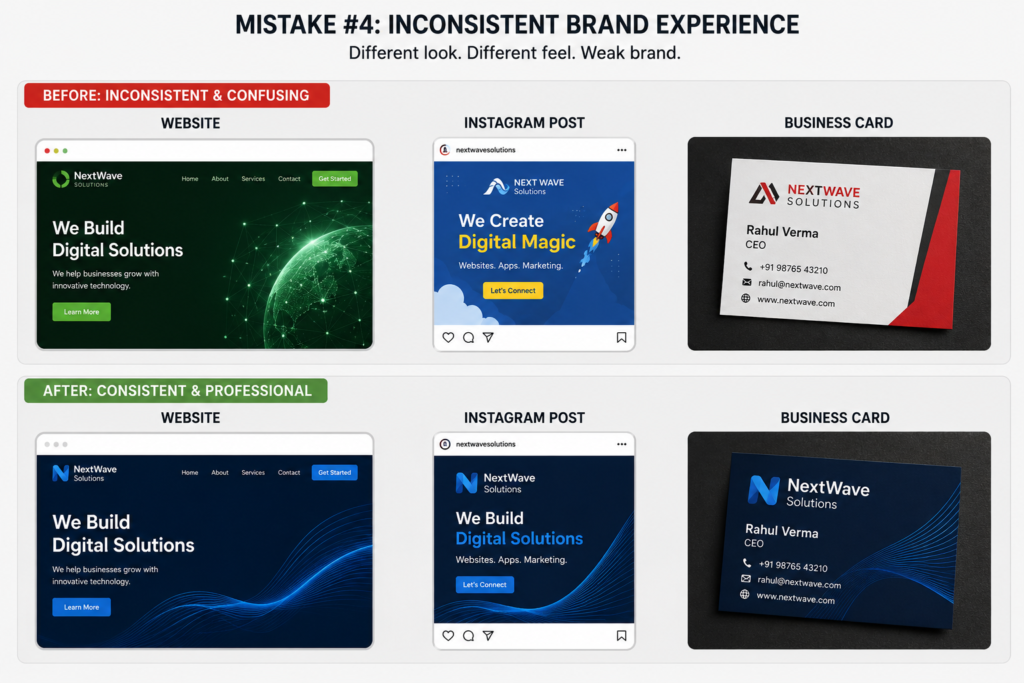
Ask most startup founders if their brand is consistent and they will say yes. Ask them to open their website, their Instagram, their LinkedIn, and their latest client proposal at the same time — and they will see the problem.
The logo is a slightly different shade on Instagram than on the website. The font used in the proposal is different from the font on the website. The tone of the LinkedIn posts sounds formal while the Instagram captions sound casual. The business card uses a layout that looks nothing like the website.
Each individual inconsistency is small. Together they create a brand that feels disorganised — like multiple different businesses wearing the same name. Customers notice this even when they cannot explain it. It erodes trust in a way that is slow and invisible and very hard to recover from.
Inconsistency almost always comes from one of two causes. Either the brand identity was never properly documented in brand guidelines, so everyone working on the brand is improvising. Or brand guidelines exist but have not been shared with everyone who creates brand touchpoints.
The fix is straightforward in principle: build a complete brand identity with documented guidelines, and share those guidelines with every person who creates anything for your brand — team members, contractors, social media managers, vendors.
Mistake 5 — Copying Competitors
Benchmarking your competitors is sensible. Copying them is a growth killer.
It happens like this: a founder looks at the leading agency or product in their space, notices they use a dark navy and gold palette with a clean sans-serif logo, and decides to do the same. Or they see a competitor using confident, bold copy and mirror the tone. Or they structure their service offerings identically because “that is what the market expects.”
The result is a brand that looks like a lesser version of whoever you copied. Customers who are already aware of the original will perceive your brand as derivative. Customers who are comparing options cannot tell you apart — so they default to price, and you lose.
Differentiation is the point of branding. If your brand does not stand out from competitors in a meaningful way, it is not doing its job. This does not mean being different for the sake of it — it means finding a genuine point of difference and expressing it visually and verbally in a way that resonates with your audience.
Study your competitors to understand what the category looks like, then deliberately position your brand to stand apart from it.
Mistake 6 — Skipping Brand Guidelines
This mistake is most common with founders who have invested in a good logo and visual identity but skipped the brand guidelines document because it felt like an unnecessary extra.
Brand guidelines are not a nice-to-have. They are what makes the investment in your brand identity actually hold up over time.
Without them, every person who works on your brand — a new team member, a social media manager, a packaging supplier, a web developer — will interpret your brand differently. Some will use the wrong logo version. Some will use slightly different colours. Some will choose their own fonts. Within six months, your polished brand identity exists only in the original design files and nowhere else.
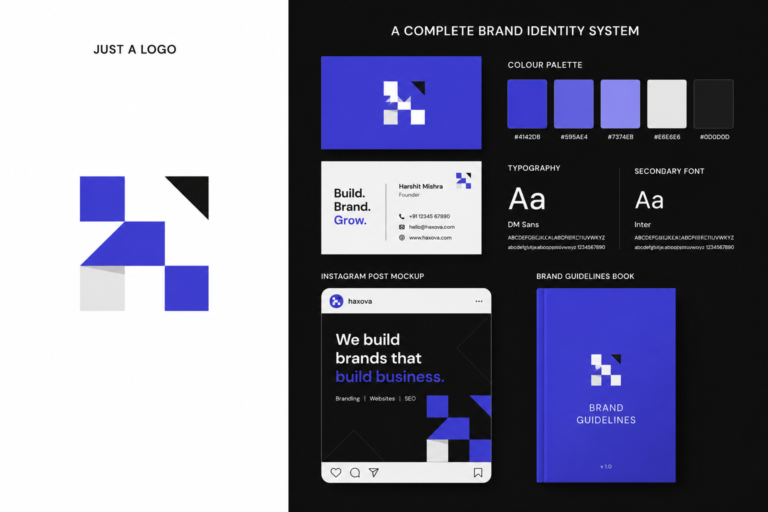
Brand guidelines document everything: which logo version to use where, the exact colour codes for every brand colour, the correct fonts and how to use them, spacing rules, approved and prohibited uses of brand elements. They are the instruction manual that keeps your brand consistent as your business scales.
Read: What is Brand Identity and Why Does Your Startup Need It?
Mistake 7 — Treating Branding as a One-Time Task
The final mistake is thinking about branding as something you do once and never return to.
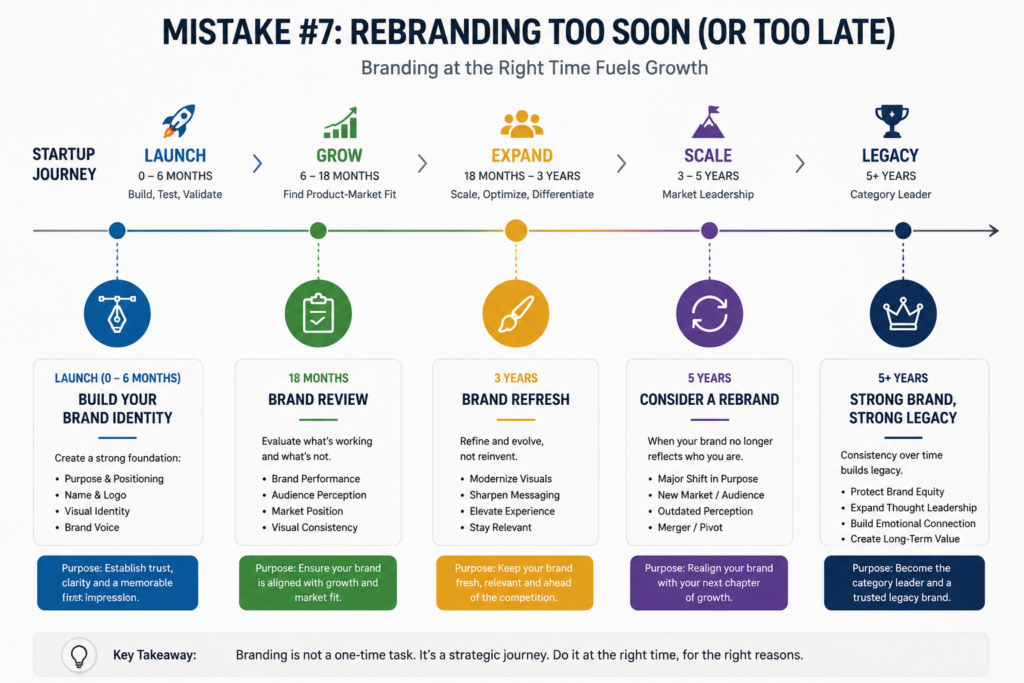
Your brand should evolve as your business grows. Not dramatically — a complete rebrand every year would destroy the recognition you have built. But deliberately, in response to real changes in your business, your audience, or your market.
Common triggers for a brand review or refresh include expanding to a new market or audience, launching a significantly different product or service, noticing that your visual identity feels dated compared to competitors, going through a major business pivot, or preparing for a fundraise or acquisition.
A brand refresh is different from a rebrand. A refresh updates specific elements — modernising the logo, refreshing the colour palette, updating the tone of voice — while keeping the core identity recognisable. A rebrand rebuilds from the ground up.
Most growing startups benefit from a brand refresh every two to three years. Treat your brand as a living asset that requires maintenance — not a box to tick and forget.
The Common Thread Across All 7 Mistakes
Look at these seven mistakes together and one pattern is clear: they are all rooted in treating branding as an afterthought.
Designing before strategy is what happens when branding comes after the product. Going cheap on branding while spending on marketing is what happens when branding is seen as a cost rather than a foundation. Inconsistency is what happens when branding is done once and then ignored. Skipping guidelines is what happens when branding is treated as a deliverable rather than a system.
The startups that build strong brands treat branding as infrastructure — not decoration. They invest in it early, maintain it consistently, and update it deliberately. And they consistently outperform competitors who treat it as an afterthought.
How to Choose the Right Branding Agency for Your Startup
See how Haxova builds brands for startups
Talk to Haxova about your brand
Read: Logo Design vs Brand Identity — What is the Difference?
Frequently Asked Questions
What is the most common branding mistake startups make?
The most common mistake is designing before defining strategy. Founders jump to logo design before answering who their customer is, what they stand for, and how they are different from competitors. The result is a brand built on aesthetics rather than strategic thinking — which rarely performs as well as one built on a clear foundation.
How does branding inconsistency hurt a business?
Inconsistency makes your brand look disorganised and untrustworthy. When your logo, colours, fonts, and tone vary across your website, social media, and printed materials, customers sense the disconnect — even without being able to articulate it. Over time, this erodes the credibility that branding is supposed to build.
Can cheap branding hurt a startup?
Yes. Cheap branding typically lacks strategy, produces generic or template-based results, and comes without the guidelines needed to maintain consistency. More importantly, weak branding reduces the performance of every marketing channel — lower ad conversion rates, fewer email responses, and less credibility in sales conversations.
When should a startup rebrand?
Common triggers for a rebrand include entering a new market, launching a significantly different product, noticing your identity feels dated compared to competitors, or going through a major business pivot. Most growing businesses benefit from a brand refresh — updating specific elements while keeping the core recognisable — every two to three years.
How do brand guidelines prevent branding mistakes?
Brand guidelines document exactly how every brand element should be used — logo versions, colour codes, typography rules, spacing, and approved combinations. When shared with everyone who creates brand content, they prevent the inconsistencies that come from different people interpreting the brand differently.